
Howard County Court Records After Arrest
After a Howard County jail arrest, the jail record and the court record move on related but separate tracks. The jail side begins with booking at the Howard County Detention Center and may show an arrest basis, hold, booking category, or bond note. The court side begins when the prosecutor or court receives and files a criminal case document. Howard County is served by the 118th Judicial District, and the county directory lists the 118th Judicial District Attorney at 312 Scurry in Big Spring. That office reviews law-enforcement reports, decides whether to file, reject, amend, reduce, or present charges, and represents the State in criminal court.
The public distinction matters. A booking charge is an allegation or custody reason. It is not a finding of guilt. Formal Howard County court records after a jail arrest may show a different charge list than the booking record because the District Attorney can screen the case and choose the charge that fits the evidence and Texas law. For custody, booking, and current-jail status, use Howard County jail inmate records. For booking-photo questions, use the Howard County jail mugshots page. The court record is the best place to follow the filed charge, case number, court dates, bond orders, disposition, and sentence if any.
The county's official entry point for online court and jail lookup is the Howard County Judicial/Jail Record Search. It redirects to a Tyler PublicAccess portal. Research found that full profile access was limited from a non-browser inspection, so a person searching Howard County court records after arrest should treat the online portal as the first channel, not the only channel.
The county entry page for judicial and jail records appears in the project image set from Howard County's Judicial/Jail Record Search page.
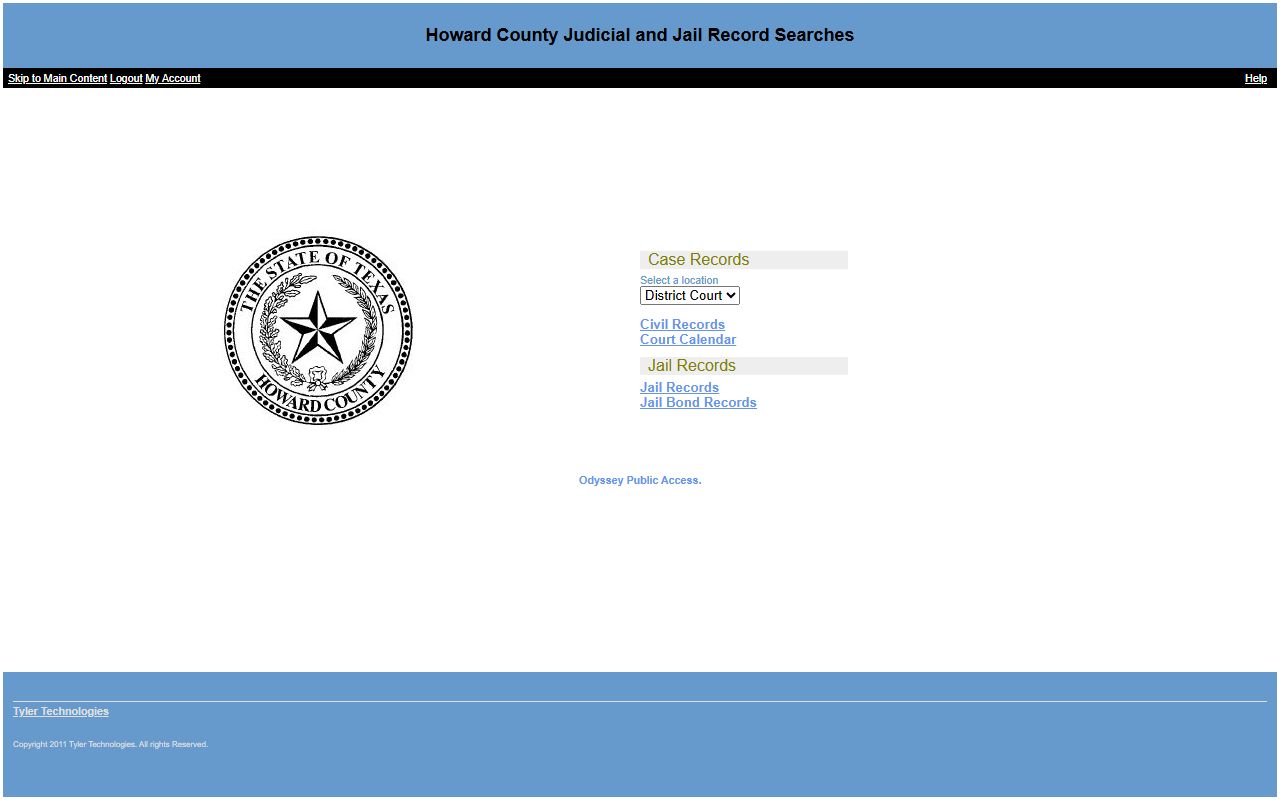
Because that entry point sends users into Tyler PublicAccess, failed searches should be followed by a clerk search, jail phone check, or written public-information request rather than a third-party record site.
Find Howard County Court Records
The court search path starts online, but the District Clerk page sets an important limit. The Howard County District Clerk states that court records can be reached through the public portal, with the note that the portal excludes criminal. The same page lists search fees for civil, family, and criminal searches, with a fee due before the search is conducted. That means some Howard County court records after a jail arrest may require clerk help even when the portal is working.
Search by the most exact data available. A full legal name is useful, but it can return false matches when a name is common. A case number is better when known. Date of birth, booking date, arresting agency, and charge wording can help the clerk or jail staff distinguish one person from another, even if those fields are not all visible in the public portal. If the person was just booked, the jail record may exist before the court case is filed.
| Field or Channel | Type | Required | Howard County Notes |
|---|---|---|---|
| Public Portal Website | Link or portal | Unspecified | The District Clerk page notes that the public portal excludes criminal. |
| Name search | Clerk request | Yes for clerk search | The listed search fee is $5 per name for civil, family, and criminal searches. |
| Case number | Portal or clerk field | Optional if known | Use it to narrow the search when a court case has already opened. |
| Cash or money order | Payment | Required for fee | The District Clerk page says no debit or credit for search fees. |
The Howard County District Clerk court-record instructions are shown in the matching screenshot from the official District Clerk page.
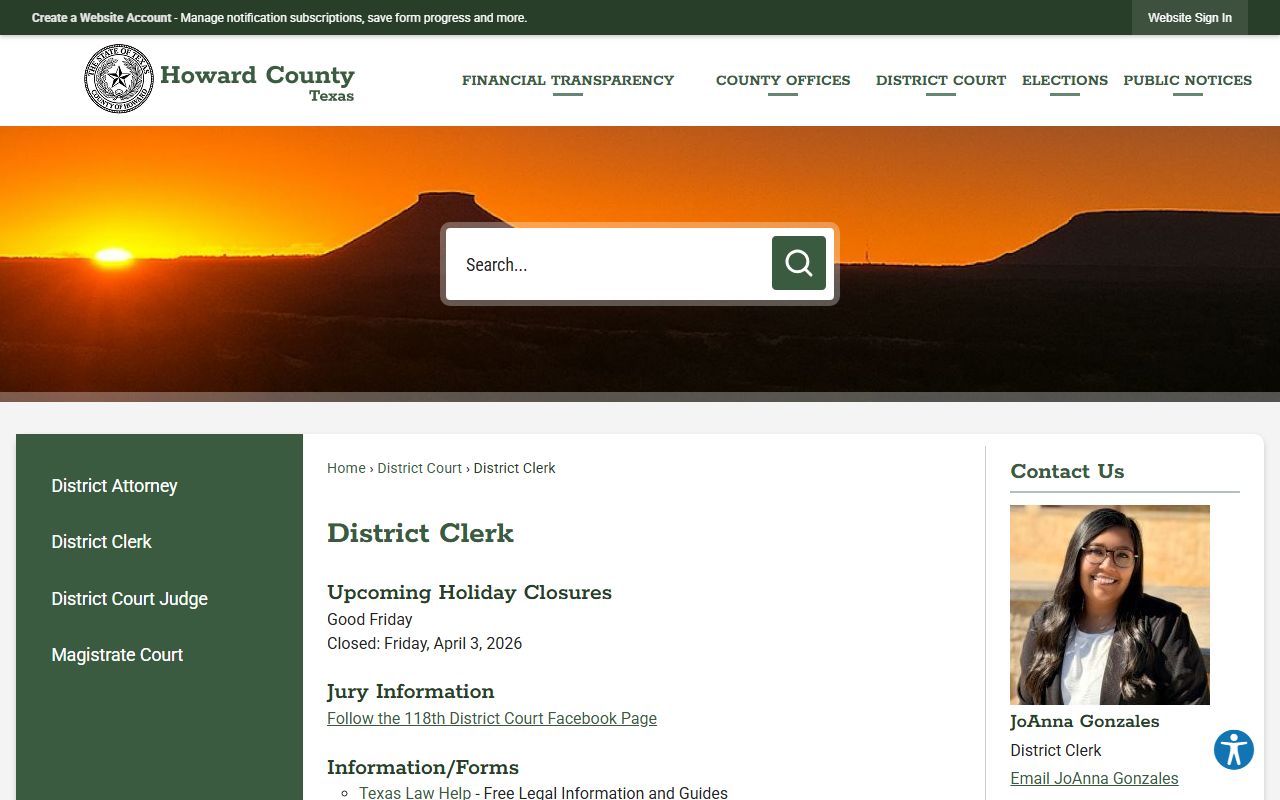
The fee language is specific to record searches. It should not be treated as a bond-payment rule or a guarantee that every criminal filing is visible online.
Howard County Arrest to Court Record
The path from arrest to court record is not instant. First, an officer arrests the person or executes a warrant. Jail staff then receive the person, document identity, record the commitment basis, and create the jail file under Texas jail standards. A magistrate or court can address bail and release conditions. After that, the prosecutor reviews the reports and chooses how the case should proceed. The filed charge then becomes part of the court record.
- Start with the official Howard County Judicial/Jail Record Search entry and allow the redirect into Tyler PublicAccess.
- Search by the defendant's legal last name first, then narrow with first name or case number if the portal allows it.
- Open the case result and read each charge, filing date, case number, court, bond order, and next setting that is visible.
- If the portal does not show criminal detail, contact the District Clerk at the official channel and ask about a criminal name or case-number search.
- For a person who may still be in custody, call the Howard County Detention Center to confirm current jail status and bond information.
Statewide conviction checks are a different tool. The Texas DPS public conviction name search is for conviction and criminal-history information, not for real-time custody, active bond status, or complete local court files. It may involve fee or account terms. It can help verify a conviction history, but it does not replace a Howard County clerk record search after a jail arrest.
Howard County Charging Records
Texas criminal cases can begin through several kinds of charging documents. The exact filing depends on the charge level, court, prosecutor choice, and grand-jury requirements. For readers checking Howard County court records after arrest, the practical issue is simple: the jail may show why someone was booked, but the charging document shows what the State is asking the court to hear.
| Document | Who Uses It | Common Role | Why It Matters |
|---|---|---|---|
| Complaint | Officer, prosecutor, or court process | Starts or supports an accusation | May appear early after arrest, especially near magistration or warrant review. |
| Information | Prosecutor | Formal written charge in many non-indictment paths | Shows the prosecutor's filed charge rather than only the arrest label. |
| Indictment | Grand jury | Formal felony accusation after grand-jury action | Can replace, narrow, or clarify the charge path in a felony case. |
A filed charge can be amended or reduced. It can also be rejected, dismissed, or replaced by a different count. That is why a current court record is more reliable than a stale booking note when the question is what criminal case is actually pending in Howard County.
Howard County Charge Status
Charge status tells where the case stands. A pending charge means the case is still active. A dismissed charge means the court record reflects that the count is no longer being pursued in that case. A reduction or amendment means the filed accusation changed. A deferred disposition or plea can create a result that is more complex than a simple guilty or not-guilty label.
| Status | Plain Meaning | Record Caution |
|---|---|---|
| Pending | The charge remains open in court. | It is not a conviction. |
| Amended | The prosecutor or court record changed the wording, count, or level. | Compare the latest filing to the booking charge. |
| Reduced | The case moved to a lower charge or lesser level. | The original arrest label may still appear in older records. |
| Dismissed | The charge was dropped in that court case. | Dismissal does not automatically erase every arrest record. |
| Deferred or plea | The person entered a court outcome with conditions or an admission. | Eligibility for later sealing or clearing depends on Texas law and the case facts. |
Note: Use the most recent clerk entry for status, because jail records can lag behind court action.
Bond in Howard County Court Records
Bond is part of the arrest-to-court pathway because a magistrate or court may set bail after arrest. Texas Code of Criminal Procedure Chapter 17 governs bail and bond procedures. Howard County did not publish a local bond FAQ or fee schedule in the reviewed official pages, so bond questions should be confirmed through the Howard County Detention Center, the court, or the clerk before money is posted.
A bond amount on a jail or court record does not always mean release is available. A person may have several charges, and each must be checked. Holds from another county, a parole or blue warrant, a federal hold, an immigration detainer, or a no-bond court order can keep a person in custody even when one charge has a listed bond.
| Bond Type | How It Works | Howard County Action |
|---|---|---|
| Cash bond | The full amount is paid as security for court appearance. | Confirm payment location and accepted tender before arrival. |
| Surety bond | A licensed bail bond company posts bond for a fee or collateral. | Confirm the company can post in Howard County and covers all charges. |
| Personal or PR bond | Release is based on a promise to appear and court conditions. | The magistrate or court decides eligibility. |
| No-bond hold | The person is held without release on that charge or hold. | Ask whether the hold is local, state, federal, parole, or another agency. |
Warrants and Howard County Arrest Records
No official Howard County Sheriff's Office active-warrant search page was located in the reviewed county sources. The Judicial/Jail Record Search may show court or jail information after a warrant arrest, but the research did not confirm a separate public warrant-list module. That makes the fallback chain important: sheriff or detention phone confirmation, the issuing court or clerk, and a written public-information request when the record is public and not exempt.
An arrest warrant is based on probable cause for an offense. A bench warrant is issued by a court, often after failure to appear or failure to comply with an order. A search warrant authorizes a search, not a public arrest roster. A fugitive or hold warrant can involve another county, state, parole agency, or federal office. Texas parole holds are often called blue warrants, and Howard County's jail-population categories track parole violators or blue warrants in official reporting.
Do not assume a warrant is cleared because no online match appears. A municipal bench warrant may not show in county jail records until booking occurs, and a statewide DPS conviction search is not an active-warrant tool. Anyone dealing with an active warrant should contact the issuing court, consult counsel, or call the sheriff or court to ask about bond, walk-in, and appearance procedures.
Howard County Charges vs Convictions
A charge is an accusation in a court record. A conviction is a final result based on a plea, verdict, or qualifying court finding. Howard County court records after arrest can show both, but they should not be read as the same thing. The difference is critical for employment, housing, licensing, immigration, and personal decisions, especially when a case is still pending or was later dismissed.
| Issue | Charge | Conviction |
|---|---|---|
| Stage | Accusation filed or pursued after arrest. | Final court outcome after plea or verdict. |
| Proof level | Based on probable cause and prosecution screening. | Requires proof beyond a reasonable doubt or a valid plea. |
| Record meaning | Shows what was alleged or pending. | Shows an adjudicated result. |
| Best source | Howard County clerk or portal case file. | Final clerk disposition, judgment, and Texas DPS conviction search when applicable. |
The DPS conviction search can be useful after a case ends. It should not be used as the only source for pending Howard County court records after a jail arrest because it does not replace local filings, bond orders, settings, or clerk documents.
The statewide conviction-history channel appears in the project images from the Texas DPS public conviction name search.
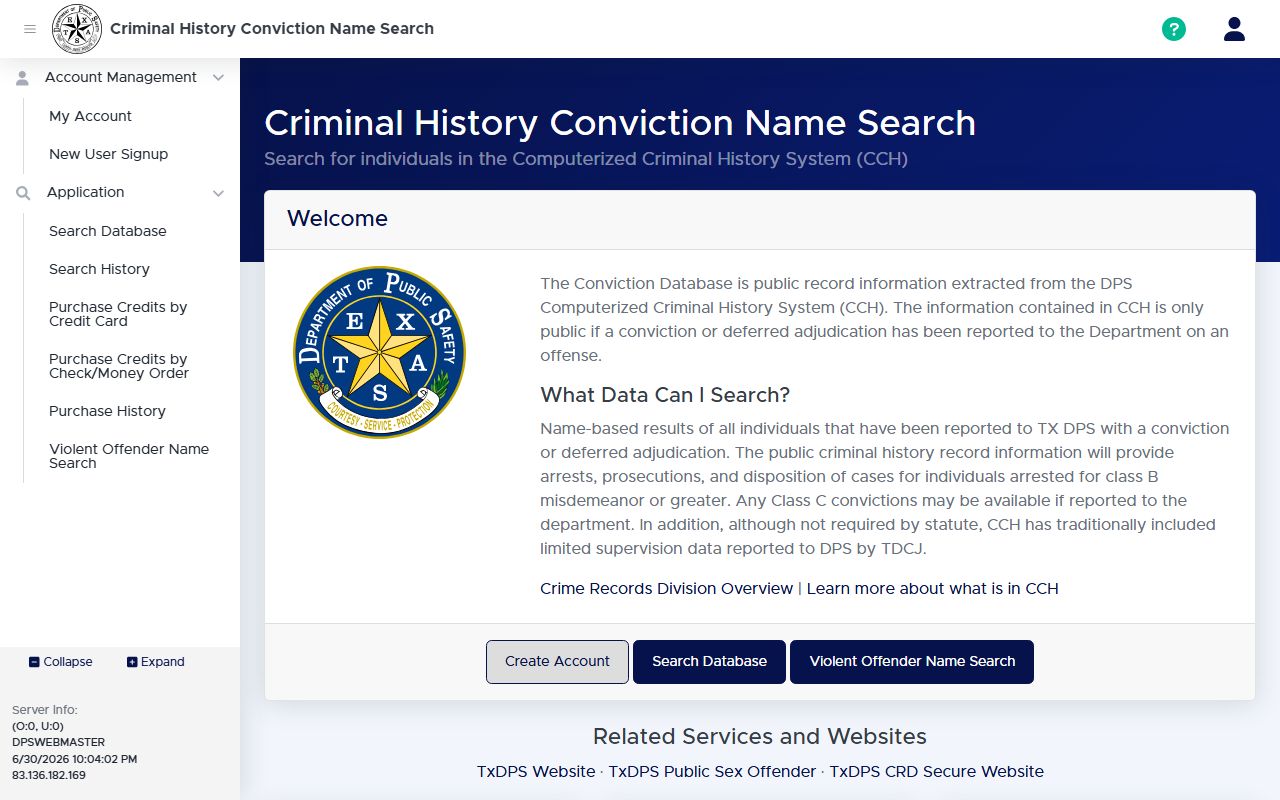
Use that statewide search as a conviction-history check, while using Howard County court and clerk channels for the local case file.
Howard County Sealed Court Records
Texas law treats expunction and nondisclosure differently. Expunction under Texas Code of Criminal Procedure Chapter 55 can remove eligible arrest records in limited situations. Nondisclosure seals many public views but can still leave access for authorized agencies. Eligibility depends on the charge, outcome, waiting periods, prior history, and the exact court order.
| Issue | Sealed or Nondisclosed | Expunged |
|---|---|---|
| Public view | Hidden from many public searches. | Removed or treated as not existing for many purposes. |
| Agency access | Some agencies may still have access. | Access is much more limited after proper orders are served. |
| Common trigger | Eligible deferred adjudication or statutory nondisclosure path. | Eligible dismissal, acquittal, no charge, pardon, or other Chapter 55 path. |
| Practical step | Check court order and ask the clerk what is public. | Confirm the expunction order was granted and sent to record holders. |
Texas Government Code Chapter 552 gives public access to government records unless an exception applies, but it does not override every privacy, juvenile, medical, victim, security, or law-enforcement limit. The State Law Library's expunctions and nondisclosure guide is a useful public reference for the difference between clearing and sealing records.
Restricted Howard County Court Records
Some records tied to a Howard County arrest may be public in part and restricted in part. Juvenile matters, medical details, victim information, confidential criminal-history data, sealed cases, expunged cases, and active law-enforcement material may be withheld or redacted. Texas booking-photo rules also limit law-enforcement publication of arrest photos in several settings, so court records after arrest should not be expected to include a public mugshot.
When the portal is incomplete, request the exact record needed. A useful request names the person, date of birth if known, booking date, arresting agency, charge, case number, and the requested item, such as complaint, indictment, bond order, disposition, or docket sheet. If the arrest began with Big Spring Police and the needed record is a city police report rather than a county jail or district-court file, the City of Big Spring has its own public-information route.
Important: Public lookup results are not consumer reports and should not be used for employment, housing, credit, insurance, or tenant screening.